The Story
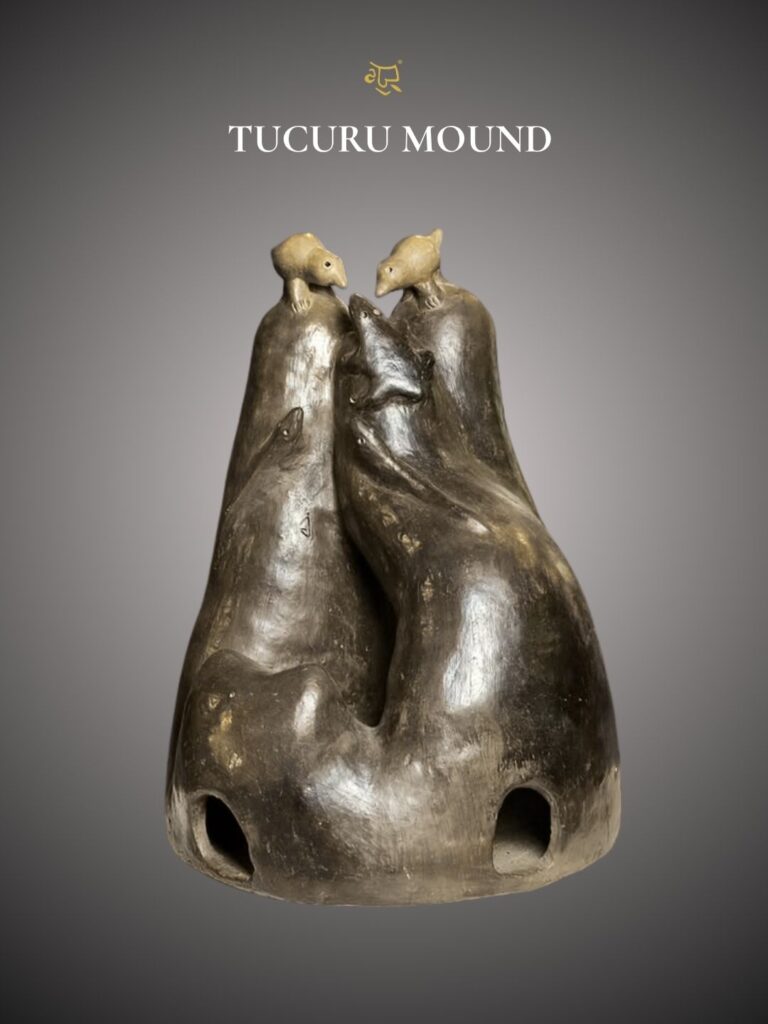
Tacurú Mound – Island of Biodiversity
A Tacurú mound is much more than a termite nest. Across Paraguay, especially in the Gran Chaco, it functions as a true island of biodiversity.
Over years or even decades, termites construct these towering earthen mounds by mixing soil, clay, organic matter, and saliva into a remarkably durable structure. Their engineering regulates temperature, humidity, and ventilation, allowing the colony to survive extreme seasonal conditions.
The ecological importance of a tacurú extends far beyond the termites themselves. The mound becomes a microhabitat that supports a rich community of life:
Plants benefit from the mound’s nutrient-rich, well-drained soil, allowing species to grow that may not thrive in the surrounding landscape.
Birds use the elevated surface as lookout posts, nesting sites, or hunting perches.
Reptiles and small mammals shelter within abandoned chambers or beneath the mound, where temperatures remain more stable.
Insects, spiders, fungi, and microorganisms form intricate food webs that depend on the unique conditions created by the mound.
During periods of flooding in the Chaco, tacurú mounds often remain above water, becoming natural refuges where plants and animals survive until the waters recede. During droughts, they retain moisture better than the surrounding soil, again providing critical habitat.
For these reasons, ecologists often describe termite mounds as ecosystem engineers and biodiversity hotspots. Each mound increases habitat diversity and contributes to the ecological resilience of the landscape.
Tacurú Mound – Island of Biodiversity
In Paraguay, the tacurú is far more than a termite mound. Built over decades through extraordinary natural engineering, it becomes an elevated refuge where plants, birds, reptiles, insects, and countless microorganisms find shelter and resources. Rising above the surrounding landscape—and often above seasonal floodwaters—a tacurú functions as a living island of biodiversity, demonstrating how even the smallest architects of nature can shape entire ecosystems. It stands as a powerful symbol of resilience, cooperation, and the interconnectedness of life.