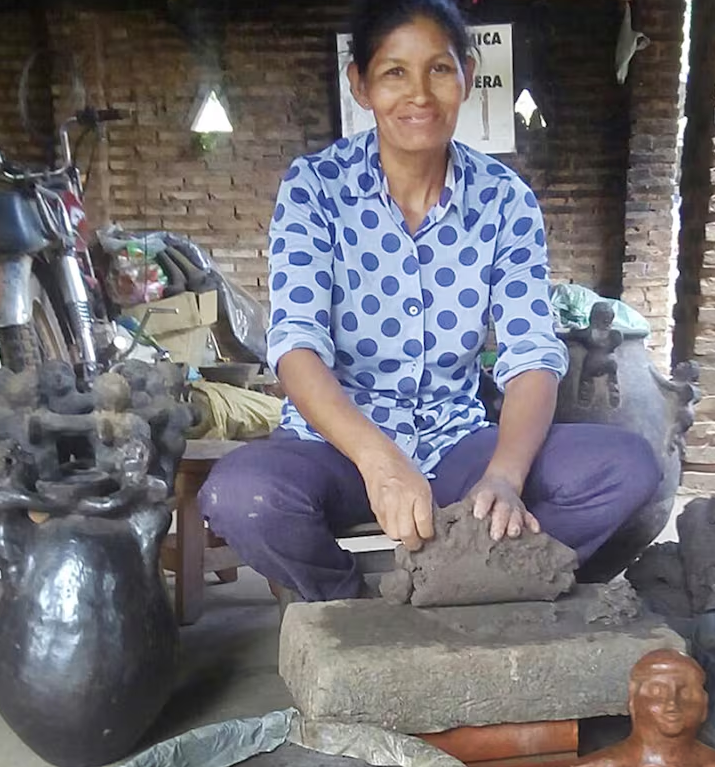
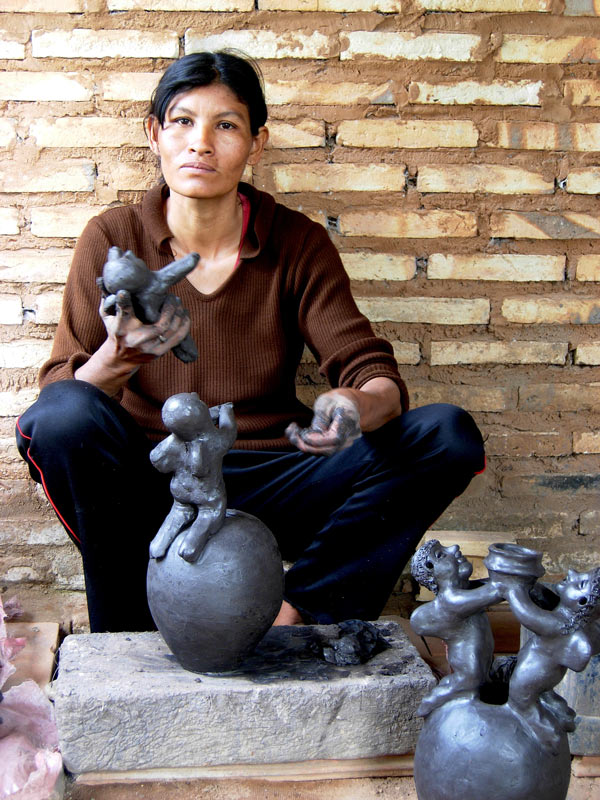
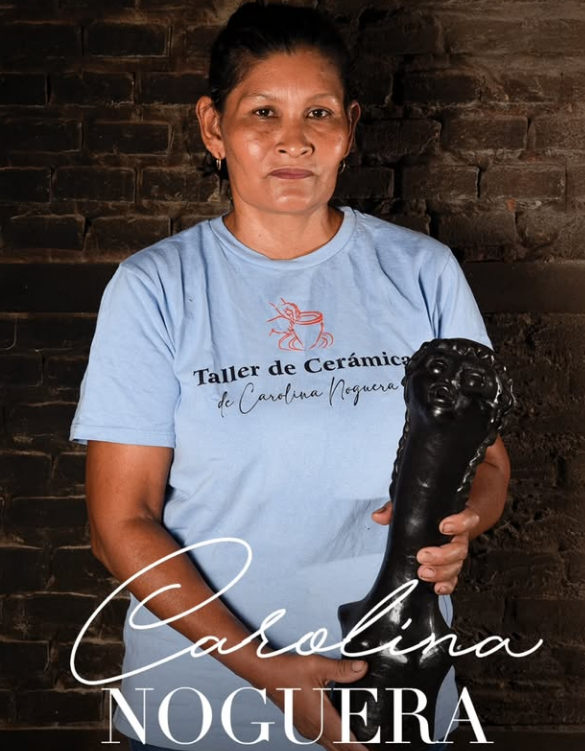
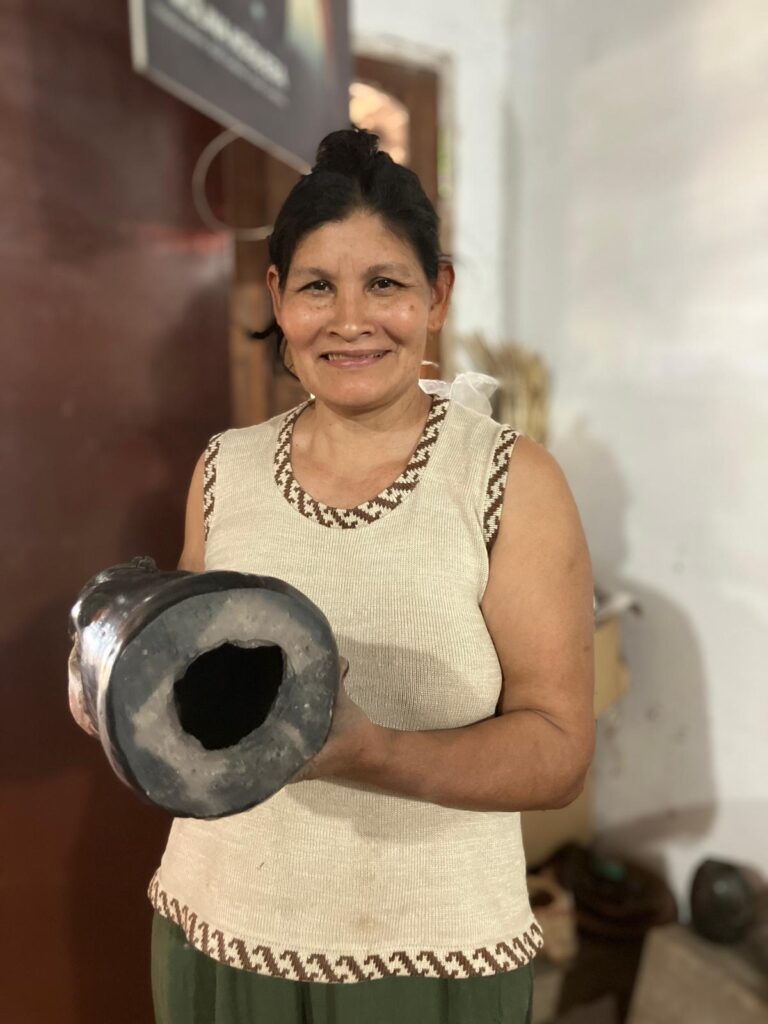
Carolina Noguera (b. 12 August 1972, Compañía 21 de Julio, Tobatí, Paraguay) is one of the most distinctive voices in contemporary Paraguayan ceramics. A leading practitioner of the ancestral ñai’upo tradition, she is celebrated for her spiritually resonant black-clay angels and figurative sculptures that bridge living cultural heritage with deeply personal expression. Artistic Practice and Cultural Heritage. Noguera belongs to a renowned matrilineal lineage of ceramists from Tobatí, one of Paraguay’s foremost centers of popular ceramics. Daughter of master ceramist Julia Mercedes Areco de Noguera (1938–2023), she learned the craft from childhood, accompanying her mother to the quarry to extract ñai’u (black clay) and caolín. The full process—hand-modeling (primarily coil technique, without the wheel), meticulous polishing (bruñido), wood-firing, and the signature ahumado (smoking with leaves or grass)—remains entirely traditional and labor-intensive.
Intangible Cultural Heritage
Collector Appeal
Noguera’s sculptures are prized by discerning private collectors and institutions for their rarity, authenticity, and emotional power. Each piece is entirely hand-crafted using centuries-old techniques, resulting in unique objects that carry both spiritual resonance and sculptural sophistication. The intense black surface, achieved through traditional smoking, gives her angels and figures a timeless, almost devotional presence that distinguishes them from wheel-thrown or industrially produced ceramics. Carolina Noguera’s art does not merely preserve tradition—it transforms it with quiet power, intimacy, and grace. Her black angels continue to “look beyond,” inviting viewers into a profound dialogue between earth, memory, and the divine.”
Intangible Cultural Heritage
In December 2025, UNESCO inscribed Ñai’ũpo art, ancestral ceramic craftsmanship on its List of Intangible Cultural Heritage in Need of Urgent Safeguarding.
Ñai’ũpo (also spelled ñai’upo or ñaiupo) is the traditional ancestral ceramic craftsmanship of Paraguay, a hand-built pottery technique deeply rooted in Guaraní indigenous culture. The term comes from Guaraní: “ñai’u” (black clay or mud) + “apo” or “ũpo” (to make or do), essentially meaning “making with black clay” or “handcrafted mud work.”
Exhibitions and International Recognition Noguera’s work has moved from local recognition to significant national and international platforms:
• Permanent collection: Museo del Barro, Asunción (her earliest winged figure is held there).asunciontimes.com
• 2011: “3 Generaciones,” Centro Cultural del Lago, Areguá (with her daughters Fátima and Clara).
• 2011: Premio a la Innovación, Instituto Paraguayo de Artesanía (shared with Beatriz Allen).
• Participation in “Grandes potières du Paraguay,” Galería Jasuka, Paris.
• 2012: Directed workshops on Tobatí ancestral techniques in Areguá.
• 2025: Selected to represent Paraguay at Expo Universal Osaka, Japan (a monumental cántaro with angels).
• 2025: “Ajúra” — collaborative exhibition with architect Christian Ceuppens, Viedma Galería de Arte, Asunción (Pinta Asunción), exploring dialogue between ancestral black ceramics and contemporary architecture.
• 2025: “Dones ceramistes del Paraguai” / “Mujeres ceramistas del Paraguay,” MuVIM (Museu Valencià de la Il·lustració i de la Modernitat), Valencia, Spain — major group exhibition with Julia Isídrez and her sister Ediltrudis Noguera, curated by Adriana Almada.valencia-international.com
• December 2025: “Las Noguera: Seis formas del barro,” inaugural family exhibition of the six Noguera sisters at CAV/Museo del Barro, Asunción — curated by Ticio Escobar and Osvaldo Salerno.
She has also participated in UNESCO-related international encounters and workshops on ancestral modeling techniques, contributing to the global visibility and safeguarding of Paraguayan ceramic heritage (with recent national recognition of ñai’upo as intangible cultural heritage).